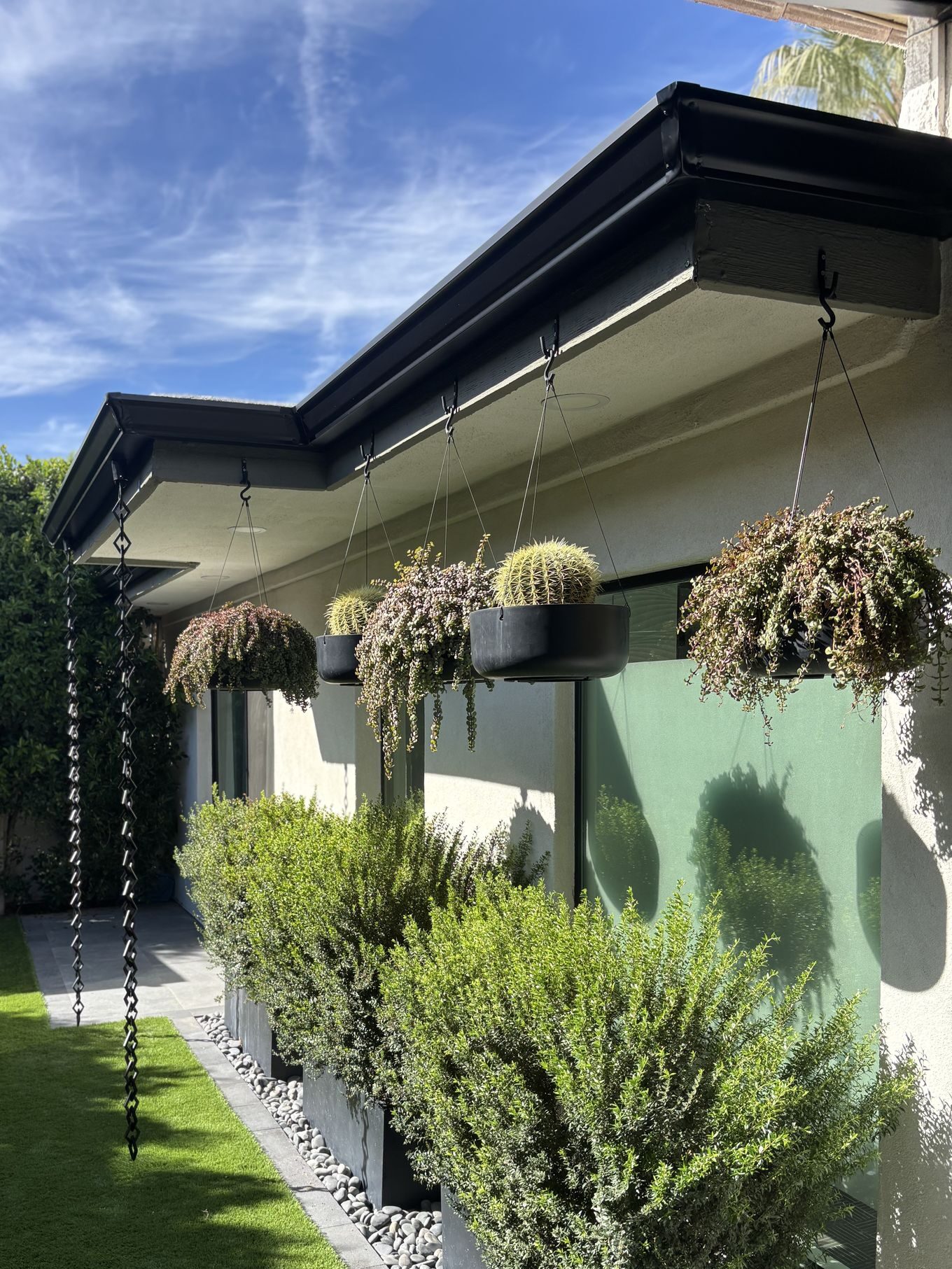
Rain chains are one of those gutter accessories that most Arizona homeowners don't know exist - and once they see one, they want it. Originally a Japanese design concept called kusari-doi, rain chains replace the standard downspout with a decorative chain, cup system, or link system that guides water downward in a visible, audible, and aesthetically beautiful way.
In Arizona's desert environment, rain chains aren't just decorative - they have a practical logic. And they photograph beautifully, especially in the Scottsdale, Paradise Valley, and Arcadia architectural contexts where copper is already present in the gutter system.
How Rain Chains Work
A rain chain replaces the downspout at any standard gutter outlet. Water flows from the gutter into the top of the chain, then runs down the links or cups under gravity - creating a flowing water feature during rain events rather than a enclosed pipe. At the base, water discharges into a basin, a decorative pot, a splash block, or directly to the ground.
The two primary types are:
- Cup-style chains - individual cups (bell-shaped, flared, or geometric) capture and pass water from cup to cup. Higher water-handling capacity. More decorative. The sound in rain is almost musical.
- Link-style chains - interlocking metal links that water runs along. Simpler aesthetic. Lower capacity but excellent for light-to-moderate flow. More architectural in appearance.
Do Rain Chains Work in Arizona Monsoon?
This is the real question for Arizona homeowners. The honest answer: yes, with the right expectations.
Rain chains are designed for moderate rainfall - the kind you get in Japan, the Pacific Northwest, or most of the Eastern U.S. A typical rainfall event there is measured in tenths of an inch per hour. Arizona monsoon events are a different animal: 1 to 2 inches in 30 to 45 minutes is not unusual.
At high monsoon flow rates, rain chains don't contain the water the way a downspout does. Some water will escape the chain and splash at the base. This is why we always recommend installing rain chains at corners of your home rather than at mid-run outlets, and providing a properly sized basin or splash area at the base.
The solution that works best in Arizona:
- 1. Size your gutters correctly (6-inch K-style in most cases) so the gutter is not overflowing before it even reaches the rain chain outlet.
- 2. Install the rain chain at a corner outlet, not mid-run.
- 3. Use a cup-style chain for higher capacity.
- 4. Provide a large basin - a 24-36 inch decorative pot filled with river rock works beautifully.
- 5. For very heavy flow, you can use a rain chain on most outlets but keep at least one standard downspout on a high-volume section.
What Material for an Arizona Rain Chain?
Copper is the obvious choice. On a home that already has copper gutters - which is common in Paradise Valley, Arcadia, and Scottsdale - copper rain chains are the natural match. The patina develops at the same rate and to the same verde-brown tone, creating a visually cohesive system.
But copper rain chains also work beautifully on aluminum-guttered homes, particularly on Spanish Colonial, Mediterranean, or New Southwest-style architecture. The warm copper tone against white or terracotta stucco is one of the classic Arizona aesthetic combinations.
Other options:
- Galvanized steel: Industrial aesthetic, weathered gray tone over time. Very durable in UV. Less elegant than copper but lower cost.
- Aluminum: Available in powder-coated colors. Light weight. Doesn't patina. Matches standard aluminum gutters but less distinctive.
- Stainless steel: Stays bright, clean appearance. Doesn't rust. Higher cost. Modern architectural look.
Where Rain Chains Work Best in Arizona
Rain chains are particularly at home in:
- Covered patio corners - the slow, steady sound of water on a chain during a light desert rain is a genuine experience.
- Courtyard downspouts - Arcadia and Mediterranean-style homes with central courtyards often have a downspout outlet visible from the main living area. A copper rain chain here is a design feature, not an afterthought.
- Entry or porch focal points - a single copper rain chain at a prominent entry corner makes a statement.
- Water feature integration - connecting a rain chain to an existing or new stone basin turns monsoon season into an active water feature.
Installation Notes from Grizzly Rain Gutters
We install rain chains as part of a complete gutter system build or as individual replacements on existing outlets. The process is straightforward: we remove the existing downspout, install a standard gutter outlet cup adapter at the gutter, hang the chain from the adapter, and anchor the base with a guide stake or basin.
The base setup matters. Without a proper basin or dispersal area, rain chain discharge in a monsoon event can erode the ground immediately below the chain and create a small sink hole over several seasons. A 24-inch decorative pot filled with river rock or a precast stone basin is our standard recommendation.
If you're interested in adding rain chains to your existing gutter system, or incorporating them into a new installation - particularly on a copper gutter project - call us or use the quote form. We have the rain-chain gallery photos on the gallery page to give you a sense of what they look like installed on Arizona homes.
Rain Chains at a Glance
Best for
- • Covered patio corners
- • Courtyard focal point outlets
- • Entry/porch prominence
- • Copper gutter systems
Arizona tips
- • Use cup-style for monsoon flow capacity
- • Install at corners, not mid-run
- • Always provide a basin at base
- • Copper patinas beautifully in AZ sun
Grizzly Rain Gutters
Owner-operated Arizona gutter specialists. AZ ROC #357629. Family-run since day one.