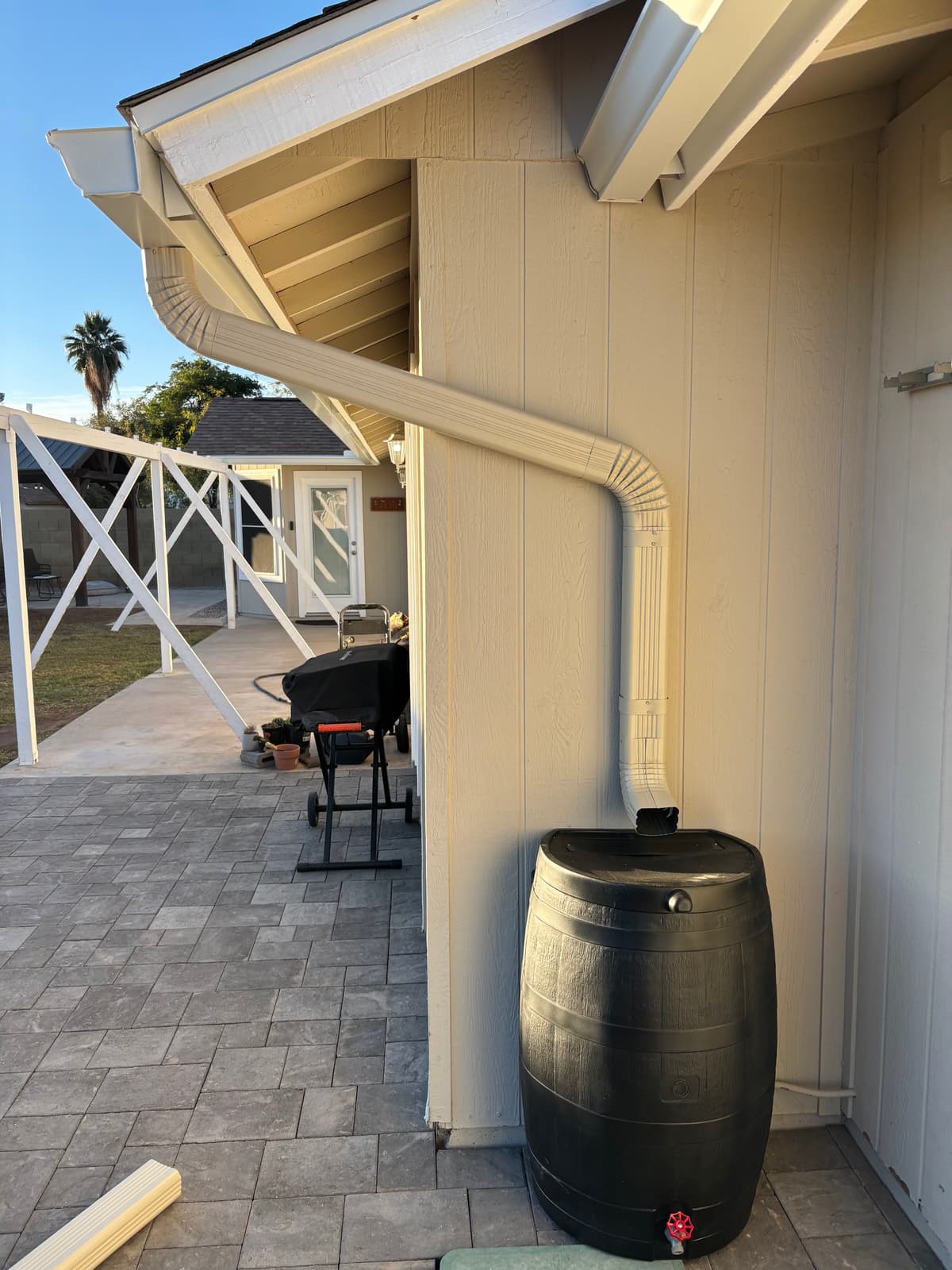
Water Catchment Systems in Arizona
Capture Arizona monsoon runoff and put it to work. Rain barrels and large-capacity tanks tied to your downspouts - sustainable water harvesting for Phoenix Valley, Flagstaff, and Prescott Valley.
Capture What Falls on Your Roof
Arizona homeowners know the paradox: months of nothing, then monsoon season delivers more water in two hours than you can use. Water catchment systems let you capture that roof runoff and store it for landscaping, irrigation, or site drainage management.
Grizzly Rain Gutters installs water catchment systems ranging from individual 50-gallon rain barrels on residential downspouts to large 2,500+ gallon tanks tied to agricultural outbuildings, barns, and large-property downspout arrays. We have tied barn downspouts into multi-thousand-gallon catchment tanks that provide months of supplemental irrigation water.
Water catchment is a growing service in Arizona as homeowners look for ways to reduce water bills, support xeriscape landscaping, and capture the intense monsoon rainfall that would otherwise run off and erode their property.
System Types We Install
-
Rain Barrel Systems
Individual 50-100 gallon barrels connected to residential downspouts. Overflow diverts away from the foundation. Ideal for targeted landscape irrigation - fill a barrel during monsoon, empty it into your garden during the dry season.
-
Mid-Size Tank Systems
250-1,000 gallon above-ground or partially buried tanks. Suitable for larger residential lots, significant landscaping, or homes with multiple downspouts channeling into a centralized system.
-
Large-Capacity Tanks
1,500-5,000+ gallon systems for acreage, agricultural outbuildings, barns, and properties with substantial roof area. We have tied barn downspout arrays into 2,500-gallon storage tanks that provide months of supplemental water.
-
First-Flush Diverters
The first flush of rain after a dry period carries the most dust and debris. First-flush diverters automatically discard the initial contaminated flow and direct only clean water to your storage tank.
Why Water Catchment Makes Sense in Arizona
Arizona is one of the best places in the country for water harvesting - the intense monsoon season concentrates a lot of water in a short time. Capture it.
Monsoon Intensity = Opportunity
Phoenix monsoon events can drop an inch of rain in 20 minutes. A 1,500 sq ft roof with 1 inch of rain generates approximately 930 gallons of runoff. That's valuable water that currently flows into your landscaping, foundation, and the street.
Irrigation Savings
Captured rainwater is chemical-free (no fluoride, no chloramine) and at ambient temperature - better for plants than municipal water in many cases. Even a 250-gallon rain barrel offsets meaningful irrigation cost over a season.
Foundation & Erosion Protection
Every gallon you capture is a gallon that isn't pooling at your foundation or eroding your landscaping. Water catchment and proper gutter management work together for complete stormwater control.
Water Rights Context
Arizona has complex water rights laws, but rainwater harvesting from your own rooftop is generally permitted statewide and encouraged. We are familiar with the general landscape - we recommend consulting your county for any large tank installation permits.
Flagstaff Applications
At 7,000 ft elevation, Flagstaff receives both substantial monsoon rainfall and significant snowmelt in spring. Water catchment systems here can capture both events, providing supplemental irrigation through the dry early summer period.
Agricultural & Rural Properties
Acreage and rural properties in Cave Creek, Prescott Valley, and outlying areas often have large barn or outbuilding roofs that shed enormous runoff. Tying these into multi-thousand-gallon storage systems is one of the most cost-effective water investments on a rural Arizona property.
How We Approach Water Catchment
- 1
Site Assessment
We walk your property and assess roof area, existing gutter and downspout configuration, lot grade, and your desired use (garden irrigation, tree watering, supplemental, etc.). This determines system sizing.
- 2
System Sizing
We calculate your approximate catchment potential from your roof area. A 1,000 sq ft roof section with 1" of rain generates approximately 620 gallons. We size storage based on your storage goals and space constraints.
- 3
Downspout Integration
We modify existing downspouts or install new dedicated downspouts to feed your tank. First-flush diverters are installed where appropriate to exclude the initial contaminated flow from your storage.
- 4
Tank or Barrel Installation
We install and connect your storage tank or barrel system, including overflow routing to direct excess water safely away from your foundation. Overflow management is critical - a full tank in a monsoon event must have a safe discharge path.
- 5
Final Inspection
We flow-test the complete system, verify overflow routing, and confirm the first-flush diverter is operating correctly. You receive a written description of your system's maintenance requirements.
Water Catchment FAQs
- Yes - rainwater harvesting from your own rooftop is legal and encouraged in Arizona. Large above-ground tank installations may require a permit in some counties, particularly for commercial or agricultural scale. We recommend checking with your county before installing any system over 1,000 gallons. Residential rain barrels and smaller tanks are generally permit-free.
- Roughly 0.62 gallons per square foot of roof area per inch of rain. A 1,500 sq ft roof catching 1 inch of rain generates approximately 930 gallons. Phoenix averages 8 inches of annual rainfall, most of it in monsoon season - so a properly sized system can capture thousands of gallons per season.
- A first-flush diverter automatically diverts the first 5-10 gallons of roof runoff - which carries the most dust, bird droppings, and debris - away from your storage tank and onto the ground. For any system where you intend to use the water for vegetables or edibles, a first-flush diverter is strongly recommended. For landscape irrigation of non-edible plants, it is beneficial but less critical.
- Yes - we run underground PVC or above-grade piping to connect multiple downspout feeds to a single centralized tank. This is how we handle large roof areas on barns, outbuildings, and multi-downspout residential installations.
- Yes - water catchment on rural and acreage properties in Flagstaff, Prescott Valley, Cave Creek, and outlying areas is one of our growing service areas. Large-scale tank installations for agricultural outbuildings and barns are a specialty.
Ready to Start Capturing Arizona Rainfall?
Free quotes for water catchment system design and installation. Rain barrels to large tanks. Phoenix Valley, Flagstaff, and Prescott Valley.