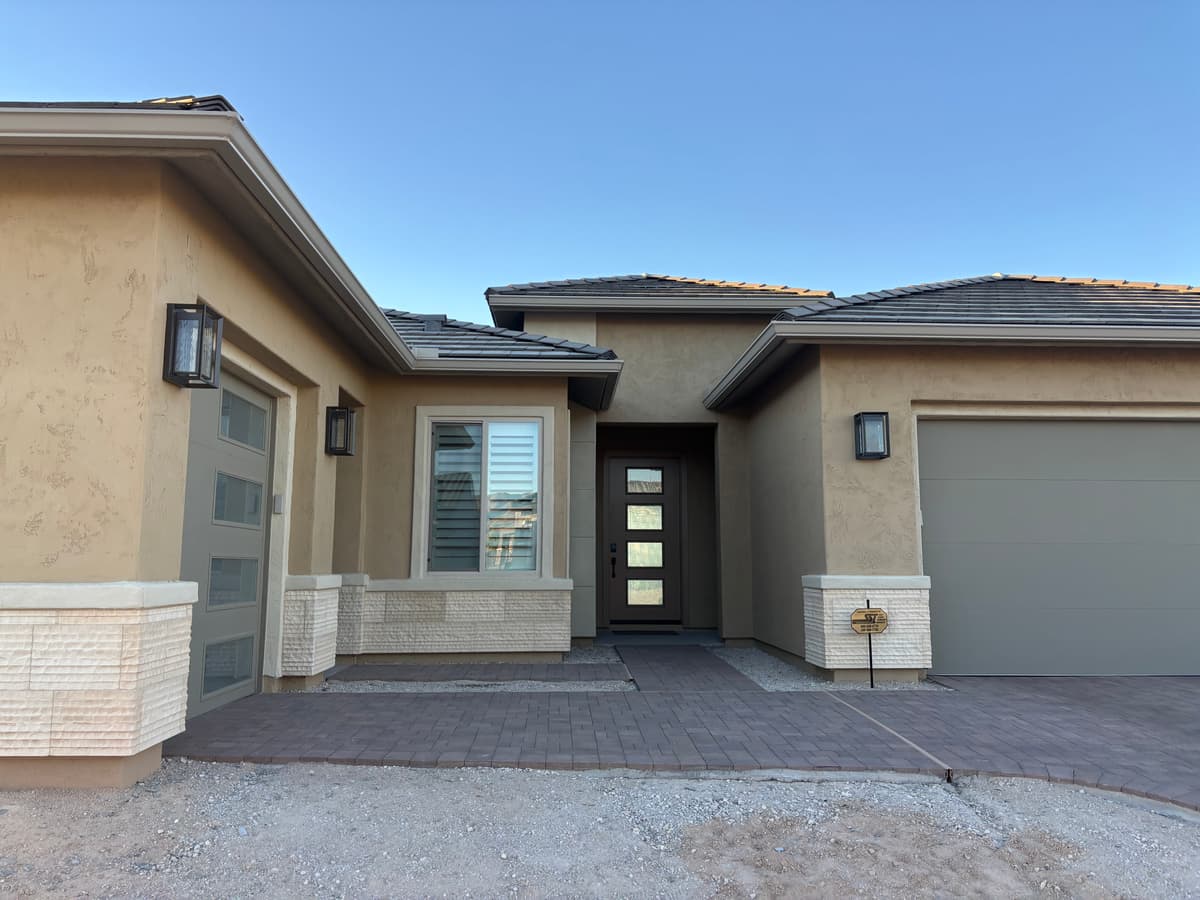
In-Ground Drainage Piping in Arizona
Connect your downspouts to underground PVC that routes water to basins, the street, or out of your yard entirely. Growing in popularity across Phoenix Valley, Flagstaff, and Prescott Valley.
Take Water Where You Want It
A downspout that discharges at your foundation is only half of the solution. In-ground drainage piping connects your downspout outlets to underground PVC piping that carries water away from the house - to a detention basin, a dry creek bed, the street, or the back of the property.
This service is growing rapidly across the Phoenix Valley as homeowners realize that surface-level downspout extensions are easily dislodged, mowed over, and aesthetically unpleasant. Underground routing is permanent, invisible, and eliminates the tripping hazard of surface-level extensions.
Our in-ground drainage installations typically start shallow - 2 to 3 inches below grade at the downspout outlet - and deepen with natural grade as the pipe routes toward the discharge point. We use 4-inch Schedule 40 PVC as our standard. Trenching is surface-level where possible to minimize disruption to existing landscaping.
Typical Installation Specs
- • 4-inch Schedule 40 PVC - standard for residential residential drainage
- • Inlet depth: 2-3 inches below grade at outlet
- • Grade: minimum 1/8 inch per foot fall to outlet
- • Clean-out access point at every bend and branch
- • Pop-up emitter or open end at discharge point
- • Can be tied to existing French drain or basin
Where Does the Water Go?
Street or curb
Most common for Phoenix Valley urban lots. Pipe runs to the street curb cut or to a pop-up emitter near the sidewalk.
Detention basin or dry creek
For larger lots, custom homes, and properties with a designed dry creek feature. Water dissipates over time in a permeable basin.
Back of property
Route water to the rear of the lot away from the home. Common for homes with rear alley drainage.
Rain garden or basin
Connect to an existing or new planted basin that benefits from the additional water. Especially effective in Flagstaff where the water is a resource.
Water catchment tank
Underground pipe can route downspout water to a centralized storage tank. Combines drainage management with water harvesting.
Is In-Ground Drainage Right for Your Property?
In-ground drainage is the best solution when:
- ✓ Surface extensions are a tripping or mowing hazard
- ✓ You have tight side yards with no room for a surface run
- ✓ Water pools within 6 feet of the foundation after rain
- ✓ Your property has a natural grade that works toward the street or a basin
- ✓ You want a clean, invisible solution that landscaping can grow over
How In-Ground Drainage Installation Works
- 1
Site Assessment & Grade Analysis
We walk the property, identify all downspout outlets that need underground routing, and assess the natural grade from the house toward the desired discharge point. We need a minimum fall to make gravity drainage work - typically not a problem in Phoenix Valley graded lots.
- 2
Discharge Point Selection
We agree on where the water goes: street curb, rear of property, basin, or tank. This determines the pipe route and trench plan.
- 3
Trenching
Surface-level trenching using hand tools or a small trencher. We protect existing landscaping and hardscape wherever possible and restore the trench cover after pipe installation. Depth typically starts 2-3 inches below grade at the outlet, deepening with grade.
- 4
Pipe Installation & Connections
We install 4-inch Schedule 40 PVC with glued joints, clean-outs at every bend, and a pop-up emitter or open-end at the discharge point. We connect to existing downspout elbows with a downspout adapter.
- 5
Test & Restore
We flow-test the system with a garden hose and verify clear drainage from inlet to discharge. We backfill the trench, restore ground cover, and confirm the system looks clean from the surface.
In-Ground Drainage FAQs
- Our standard installation starts 2-3 inches below grade at the downspout connection and deepens with the natural lot grade as the pipe runs toward the discharge point. Shallow installation minimizes disruption to existing landscaping and makes future access easier. We bury deeper when the route crosses a driveway, patio, or requires protection from surface loads.
- 4-inch Schedule 40 PVC is our standard for residential downspout drainage. This is sufficient for all standard residential downspout flows, including 3x4 downspouts on 6-inch seamless gutters during heavy monsoon events. We upsize to 6-inch for commercial applications or multi-downspout manifold systems with very large drainage areas.
- Underground drainage pipes can collect debris that washes down from gutters and downspouts over time. We recommend cleaning your gutters before monsoon season and using gutter guards to minimize debris entering your downspouts. We install clean-out access points at every bend, which allows periodic flushing if debris does accumulate.
- Most residential in-ground drainage installations in Phoenix and Maricopa County do not require a permit when the discharge point is on your own property or connects to the street curb/gutter via approved outlet. We recommend checking with your city if you have questions - we can help assess whether your specific project is likely to need one.
- Yes - we commonly manifold multiple downspout outlets into a single main drainage line. This requires a slightly larger main line (typically 6-inch) and careful grade planning to prevent backflow. It is an excellent solution for homes with many downspouts and limited discharge options.
- Yes - we install in-ground drainage systems throughout the Phoenix Valley, including Scottsdale, Mesa, Chandler, Gilbert, Glendale, Surprise, Tempe, Peoria, and all surrounding communities. We also serve Flagstaff and Prescott Valley.
Solve Your Drainage Problem Permanently
Free quotes for in-ground drainage piping installation. Phoenix Valley, Flagstaff, and Prescott Valley. We come to you.